




Archive for writing

yet another escape from a polygamist cult

Okay, this is the third novel about a young teen girl who escapes from forced marriage in a polygamist cult that has cross my desk in the space of a year. Keep Sweet, by Michele Dominguez Greene, is a good read. Like the other two I’ve reviewed here, this book has its virtues, but laid side by side all three beg the question “Why are we so fascinated by this one story line?”

In Keep Sweet, 14-year-old Alva Jane is an obedient daughter of the third—and favored—wife of her father. (He has a total of seven wives and 29 children.) Alva Jane has never questioned life in the FLDS compound or the authority of the older men who rule it. Although her life is physically hard (she and her mother bake bread every morning for the whole household) she is privileged by her father’s position, privileged enough to dream of being a first wife herself to the handsome and kind John Joseph, her 17-year-old math tutor.

But jealousy runs high in the huge family. Her father’s spurned first wife is out for revenge on Alva Jane’s mother. When Sister Cora discovers Alva Jane and John Joseph in a stolen kiss, all hell breaks loose. Alva Jane is beaten and imprisoned, John Joseph is run off the plantation. Then Alma Jane is married to a particularly violent man three times her age, a man who beats and humiliates his wives into obedience.

Despite the rapes, despite the poverty of opportunity, despite the culture of submission, hope stays alive in Alva Jane. With the help of another unhappy sister wife she prepares to make a run for it.

Clearly the audience for this book is not young girls stuck in polygamist cults. They will never be allowed to read it with its message of hope and its clues to successful escape.

Why does the story matter to the rest of us? There is a creepy fascination with polygamy right now. Just have a look at the “just folks” photo on the cover of the February National Geographic. It isn’t just the snow on the ground that gives you a chill.

Each of the novels centers on a girl who is just coming of age for critical thought. Right at the time she could begin to think and act for herself, she is married off to a controlling man. Each girl comes, eventually, to think for herself enough to attempt escape.

Are we asking, “What would I do if I were one of those girls in prairie dresses? Surely I’d get out of there. How?”

Could it be that the polygamist compound is a metaphor for societal expectations? Do the abusive marriages stand in for garden variety abusive homes?

One thing that haunts me is how unprepared any of the children—Lost Boys or escaped girls—are for life beyond the compound. A real girl, if she could cut herself loose from family and siblings, her culture, religion and home, would be a sitting duck for exploitation. What is waiting for her in the outside world?

Filed under: books, reviews, uncategorized, writing
Comments (2) | Email This Post | Print This Post | 595 views

when they start writing the history

Right now I am reading a brand new book The Politics of Child Sexual Abuse by Nancy Whittier.

It’s the first study of the movement to end child sexual abuse in the United States. And unlike the other books I’ve reviewed here, it is not for teens or a popular audience. But it’s well worth reading for anyone concerned about child welfare and social justice movements.

Caveat: I am not finished reading it, but I am already nodding my head and making notes in the margins. Nancy Whittier looks at the movement from its feminist roots through the self help and mutual help era of the 1980’s and mid 1990’s, on through the backlash and into the present. She observes how the movement has changed public perceptions of incest survivors and perpetrators and how its success has also meant the loss of control over the language and meaning given to the survivor experience. She asks questions that are well worth examining, like why have the personal narratives of male survivors of clergy abuse received so much media attention, while those of female survivors have not?

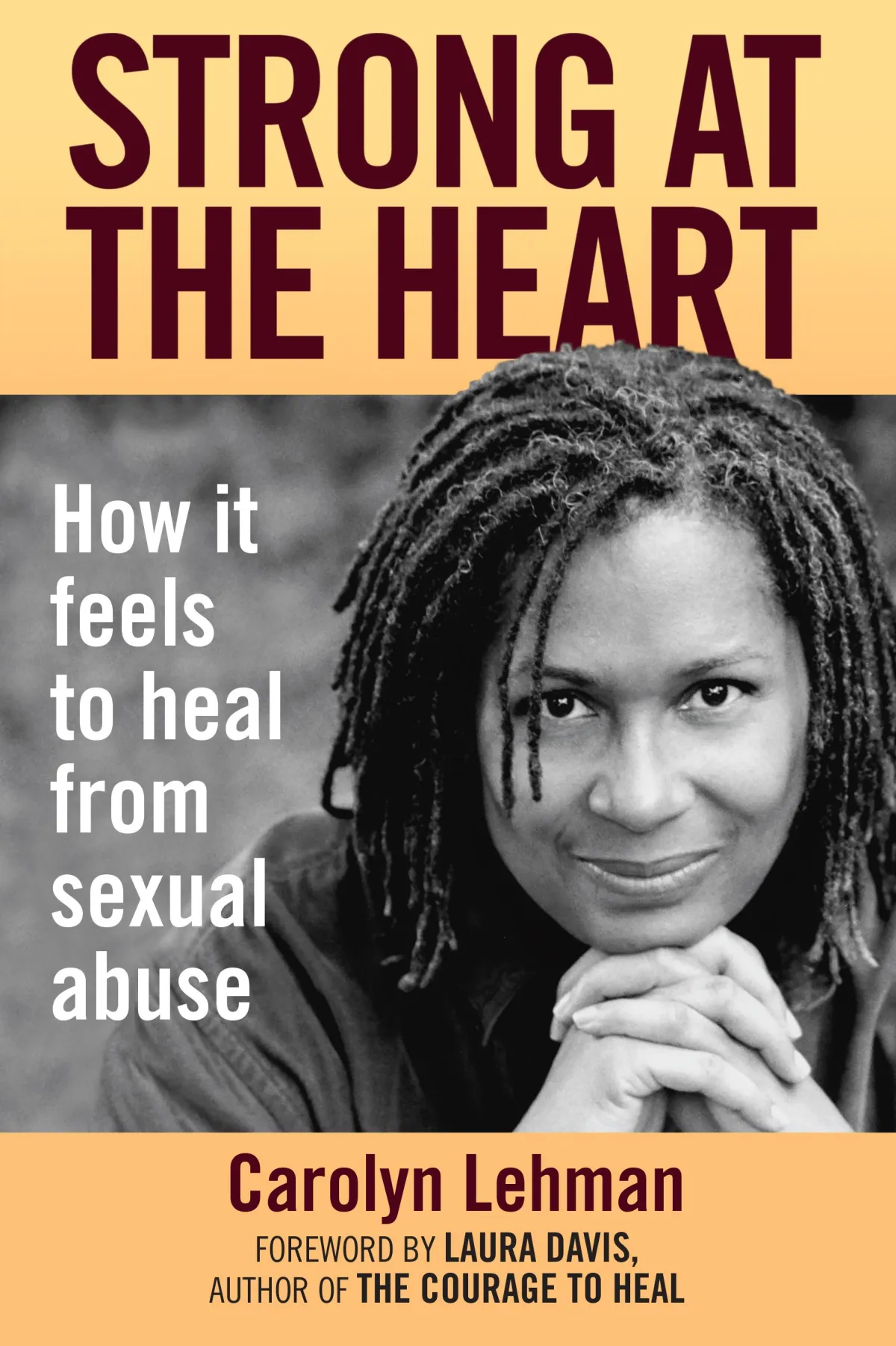
For me, this book provides a larger context for my own story. Social denial in the 50’s and 60’s (I didn’t even have a word for it as a child). Struggling–as a childrens book writer in the 70’s–to explore and represent the heroism it takes for kids to face and report abuse. Publication in 1985 of Promise Not to Tell and a raft of public speaking engagements as the subject broke open. My own major healing in early ’90’s and involvement in the The Healing Woman and Run Riot. The mainstream publication acceptance of Strong at the Heart: How It Feels to Heal from Sexual Abuse a book for young adult readers just a few years ago which includes a wide range of abuse and healing experiences.

But for survivors not of my particular generation, there’s a lot here, too. The social roots that the author traces, the analysis of the roles of government and media–all this is our history and informs our identity as survivors. If you want to change the world, it’s well worth seeing what happened when we tried–and did. (And it didn’t all come out roses.)

This is a scholarly work, not an easy read. But the scrupulous research is rooted in lived experiences of survivors and activists. I know. I’m one of the hundreds of people Nancy interviewed over ten years of research and writing. Now, to get back to reading…

Filed under: books, writing
Comments (0) | Email This Post | Print This Post | 328 views

a reader writes

Earlier this summer a reader in a small cattle town in a rural Western state wrote a letter on a typewriter and mailed it to my publisher, Farrar, Straus and Giroux in New York. The letter went on to my editor, Melanie Kroupa, in Boston. She faxed it to me in northwestern California.

Here, with the writer’s permission and with identifying details taken out, is her letter:

“I just read Carolyn Lehman’s wonderful book, Strong at the Heart: How It Feels to Heal from Sexual Abuse. I love this book and I found it to be very helpful. I was sexually abused some of my childhood years and when I was 14. I go to the library often and look for books on this subject. There aren’t many, not at my library. When I found this book, at first, I was afraid to read it. I read it with caution, because I didn’t know what to expect. I read the whole book in an hour. I even had to stop and wipe away tears every now and then. This book, the people who wrote their stories…they’ve inspired me to pick up the shattered pieces of my life and move on. It will be a long healing process. This book has helped tremendously.”

When I wrote asking her permission to quote her on this site, she responded in part:

“Please know how grateful I am that you put such a book together–it’s an incredible feeling, knowing that I’m not alone. ”

And isn’t that the heart of it? That feeling of isolation is the worst. Yet we are really not alone at all. We are surrounded by other survivors of sexual abuse. It’s the stigma of abuse that prevents us from connecting with and supporting each other. I’m so glad this reader found an opening at her public library and role models for her own healing.

She also said, “I was amazed that an author wrote to me! A famous person!” (Well, hardly famous.) Authors and editors and publishers are human beings. Her letter let a lot of people involved in the publication of Strong at the Heart know the impact of their choice to publish this book.

She’s right, too, it can be hard to find good resources. Letters like hers give support to those with the courage to publish books that are needed, not just potential blockbusters. I wish librarians and booksellers could hear from readers like her, too.

Here are some of my favorite books and films about healing from sexual abuse.

Filed under: books, reader response, writing
Comments (0) | Email This Post | Print This Post | 467 views

after long silence

It’s been way too long since I posted here. What has absorbed me is my involvement in digital storytelling. This began as an invitation a year ago from Amy Hill of Silence Speaks to participate in a digital storytelling workshop.

Digital Storytelling gives ordinary people the skills to make short, personal QuickTime/DVD movies about their experience. What I find fascinating is seeing what people do when they have the power to communicate their inmost experience in video format without the mediation of editors, journalists, filmmakers, etc. The stories are incredibly moving and often reveal a great deal that gets lost in slicker productions.

Amy’s site, Silence Speaks, contains the stories of men and women, boys and girls, who are overcoming sexual, physical and emotional violence in their lives. The stories speak about facing racism, making it through foster care, being abandoned by family after reporting abuse. It’s heavy stuff, but also very inspiring. You might want to check it out.

home town

What I’ve done with it this spring is not abuse related. Working with a grassroots women’s health organization, another writer and I developed a program for cancer patients to help them tell their stories. We were fortunate in being granted the funds to bring the Center for Digital Storytelling to our small town for a three day workshop so that the participants could turn their written scripts into 3 minute movies.

If/when the stories go up on line, I’ll post a link for you here.

And, yes, what got me involved was my own cancer experience. I’m healthy now and very happy about it.

Filed under: media, websites and weblogs, writing
Comments (0) | Email This Post | Print This Post | 287 views

who you are

You might be a first time visitor to this site, or an old friend coming back to see what’s happening with Strong at the Heart, or someone who needs information now.

It’s been a year and a month and a week since this website went up and I started this book blog.

Blogging—as many have observed—is both an intimate and an annonymous experience. Well, I’ve chosen to not be annonymous. But who are the other participants?

Who comes to this website? Besides you, who reads this blog?

feedback

Of course, I hear from many of you via email and posted comments. So I know my sister visited the site when a friend asked her for a good book on sexual abuse for very young children—the day after I put up the review of Mia’s Secret.

Several adult men have written about the effect of reading the book or seeing the photos. As one put it, “This is the first time I have looked into the face of another man who was sexually abused.”

Researchers and librarians write to say they find the booklist helpful. Teens trying to get out of abusive situations, survivor activists, therapists, concerned parents, children’s book folks–you are a varied group of correspondents. I enjoy hearing from all of you.

what you want

My stats program lets me see what terms visitors have typed into the search engines that bring them to these pages (but not who the visitors are, of course).

stories of strong teens
child abuse true stories
how do you heal from sexual abuse
recovery from molestation
Marisca Hagrity (our pages are linked—she recommends Strong at the Heart!)

The above are some of the most frequent search terms. Then there are the heartbreakers:

how to get help for teen offenders
help for sibling abuse
how to stop incest
can kids heal from molestation

These are the courageous kids and adults who are looking for resources and referrals. It’s a privilege to be a stop on their journeys.

Then, of course, there are a few lost souls looking for sex sites. But I figure that anyone who makes it here may encounter information they didn’t know they needed to find.

where you go

After this blog and the home page, the most popular pages are books and films and favorite websites. But a constant stream of visitors explore all the pages. The help pages are popular as is the order page (thank you!) and the bio page (go figure!)

where you come from

Links, of course, bring me a lot of readers from sites like Wikipedia where Tony Sandal started an excellent—although constantly changing—book list. Rape Crisis centers link to these pages, as do book blogs and interviews like Cynthia Smith’s excellent pages on children’s authors. Awards lists also bring me readers. And I’m always happy to see new blog links and feeds.

Search engines postfixes include uk, ca, de, ie, ro, in, no, pl, th, se, il, fr, tr, es—and on and on. Some hits come through translation services. The readership is truly world wide.

namaste

When I started blogging I thought I would simply record the first year in the life of the book. But plans have a way of changing.

I didn’t even notice the first year anniversary (October 27th) I was so busy preparing to speak at Healthy Teen Network, California Library Association, and the Instituto Familiar de la Raza in early November.

Interest in Strong at the Heart is—well—as strong as ever. The readership on the site continues to grow. The book is selling well and reaching new audiences. I learn so much from the people who write to me.

So I’m keeping on.

Thanks to you for reading. And thank you to all who write in. I am grateful for every person who makes it to this site.

Filed under: reader response, websites and weblogs, writing
Comments (2) | Email This Post | Print This Post | 282 views

just listen

The first thing I did when I finished reading Just Listen, by Sarah Dessen, was to check out the Cybils website and make sure that this stellar young adult novel has been nominated for the YA fiction award. (It has.)

Dessen really gets it. Really understands that people who have been sexually assaulted are not cardboard victims, nor completely defined by their experience. I think a lot of teen readers will identify with her heroine Annabel Greene–not because she is a teen model (this threw me off at first)–but because she leads a full, complicated, problematic but also hopeful inner as well as outer life.

just-listen-jacket001.gif

Here’s the jacket. (I’m working with a new blog editing package and haven’t figured out yet how to get larger-than-thumbnail images.)

The story is told through a series of flashbacks in the voice of Annabel, the youngest of the three Greene sisters all of whom have been child models. Each of the sisters has her own struggle and by the end of the novel the three have moved towards much more mature relationships with themselves, each other and their parents.

One of the rewards of the book is to watch as Annabel develops a relationship with Owen Armstrong, a boy who challenges her to be honest with herself. It’s a real struggle for this girl who has earned her popularity through superficial beauty and making nice. To her credit, Dessen makes Annabel a thoroughly likeable person even as she comes to see that she has built her life on socially acceptable lies.

If you like teen fiction and girl stories with depth, pick this one up.

scratch

On the other hand, I was very disappointed in Jumping the Scratch, by Sarah Weeks. It’s well written. Has engaging characters. Most of all, it’s a book for 10 and up–younger readers–in which a boy protagonist copes with an incident of sexual…well, this part is hard to define–harassment? assault?

jumping002.gif
Like Annabel, Jamie Reardon leads a life complicated by relatives. He and his mother are living with and trying to care for his Aunt Sapphy who has lost her short term memory. Jamie is actively stuffing the memory of something that happened between him and Old Gray, the man who runs the trailer park where Jamie and his family live. The portrayal of their lives and of Aunt Sapphy’s disability is textured and well realized.

The secret comes out when Jamie’s quirky friend “hypnotizes” him and Jaime remembers an assault that appears to be only a hug, although he’s clearly traumatized by it. What gives? Then he tells the secret to his aunt because she has no short term memory so won’t do anything about it. But–tada!–she gets her memory back just before he tells her the secret.

You see what I mean? The story resolution, the way things work out, just doesn’t ring true for me. It feels like outsider fiction in that Jamie is acted upon by others, he is not the author of his own life. The resolution relies heavily on coincidence. I think a ten-year-old reader would respond with “Hunh?”

Readers are left never understanding what happened between Jamie and Old Gray. And how it comes to our attention is awfully confusing. Hypnosis? By a ten-year-old playing magician? This part seems informed by the experiences of adults in therapy not by the realities of a boy living in the same trailer park as his perp.

Maybe I’m reacting to the pry-the-lid off aspect of the hypnosis, but it’s as if Jamie has to be tricked to move forward. I never see him as a person with strength to draw on or the ability to make things better for himself. Classic victim.

Maybe I am missing something here. Did you have a different reaction to this book? I’d love to hear about it.

the challenge

I do have some idea of what the author was up against in trying to publish a book for kids under twelve that addresses sexual abuse.

As an author, you try to tell a story that is honest and relevant to the lives of young readers. With difficult topics, you need to be clear and specific–but you don’t want to be so graphic as to traumatize a child new to the subject or retraumatize survivors. It is a delicate line to walk. Then there’s the whole maze of adults to deal with, the editors, publishers, marketing managers, reviewers, librarians, bookstore owners and parents who stand between a children’s author and her readers. Adults can get uneasy about things that kids can handle fine.
In 1985, I faced many of these challenges when I wrote Promise Not to Tell specifically for 7-10 year olds. Despite all my efforts, the two publishers marketed it for “12 and up” because they thought it would not be seen as appropriate for younger readers, even though we all knew how pervasive sexual abuse is among younger kids.

My hat is off to Sarah Weeks for writing for this age group. I just wish I could enthusiastically recommend her book.

Filed under: books, writing
Comments (0) | Email This Post | Print This Post | 813 views

survivors and sterotypes

Where do you get your image of who and what survivors of sexual abuse can be? Do the survivors portrayed in books and movies accurately reflect real people’s experiences–or are they projections of the creators’ own fears and beliefs?

This summer I sat down with recent young adult novels that have major characters who are survivors of incest, sexual abuse, and rape. It was eye opening to look at these books side-by-side and consider just what they tell young readers about surviving abuse.

“Hero, Victim or Monster? an author looks at depictions of sexual abuse survivors in YA fiction” was just published in School Library Journal.

Here are some exerpts, but you can read the whole article on line.

At age 10, Jonathan was sexually abused by the family priest. “When I started middle school and realized what sex is, that’s when I really started having a problem with this,” Jonathan, now a young adult, told me. “What happened with Father Jim made me feel like a lesser person.” Jonathan turned to alcohol, drugs, and aggressive behavior to cope with his shame and prove that he could be “cool, a real man.”

I spent several days with Jonathan when he was 17, interviewing and photographing him for Strong at the Heart: How It Feels to Heal from Sexual Abuse (Farrar/Melanie Kroupa Books, 2005). My purpose was to show—through their own words—how real teens and adults overcome childhood sexual trauma. I wanted readers to have a clear picture of what sexual abuse is, who survivors really are, and how people make choices that lead to a healthy outcome.

The survivors I interviewed have done a substantial amount of healing and come from a wide range of cultural, economic, and racial backgrounds. Our conversations showed me how much we have to learn, if we will only listen. I saw how teens hunger for stories about others, like themselves, who have coped with traumatic experiences. They also gave me new criteria for evaluating fiction that depicts this all-too-common experience of childhood and adolescence.

You might expect that trauma this pervasive would be examined—and its impact explored—in literature for the very people who are living it. Yet few of the teens I talked with had seen their experience reflected in a book.

titles

Books discussed in depth include two by Chris Lynch, Inexcusable and Sins of the Fathers, Laura Weiss’ forthcoming Such A Pretty Girl, R. A. Nelson’s Teach Me, and Beth Goobie’s The Place Where the Losers Go.

There’s also a list of some excellent older books by Jacqueline Woodson, Chris Crutcher, Cynthia Voight and Cathy Adkins.

To evaluate the books, I used four criteria that came from discussions with young survivors. I’d love to know what you think!

Filed under: books, media, writing
Comments (4) | Email This Post | Print This Post | 391 views

more on books

Pause. Okay it’s summer AND I’ve been deep into working on an article for School Library Journal about the representation of sexual abuse survivors in fiction for teens.

It’s something I’ve been watching for decades now, how survivors are depicted in film, on the news, and in literature. In the article, I won’t be getting into the history of it. My editor at SLJ has given me 1,700 words–not a conjunction more–to state my case so I am focusing on how to evaluate new books.

But historically, it is interesting. I’ve seen waves of stereotypes: Pitiful Victims, Damaged Goods, and of course the psychological Monsters of murder mysteries and legal defense strategy (Kate Atkins’ Case Histories is a recent example–a child is murdered by–tada!–the kid who was being sexually abused!)

But I am also seeing something totally cool happening which is that, in young adult fiction at least, competent, active survivors are also being portrayed.

Gigi Boudokian in Chris Lynch’s Inexcusable is one. Even though the story is told through her rapist’s eyes, Gigi is so firm in her truth that when she says, “You raped me,” we believe her not the narrator. In The Place Where the Losers Go by Beth Goobie the two main characters are dealing with dissociation and PTSD, yet they are able to help each other figure out their lives. They are heroes, not victims.

And there’s a new book coming out in January, Such a Pretty Girl, by Laura Wiess, with a very strong survivor at its core.

The article is slated for October publication. As soon as it comes out I’ll post a link here.

comments

I’ve learned to live with blog spam. Comment function is turned on again. As always, there’s a delay before your comment goes up. That’s when I okay your words and delete the ads for Xanax and low rate mortgages.

Filed under: books, writing
Comments (3) | Email This Post | Print This Post | 302 views

that kind of day

Today was an in between kind of day. I’m back from travel for the book. Haven’t solidified upcoming appearances for summer or fall yet. There’s a stack of short writing assignments on my desk.

The sky was half fog (to the east), half sunshine (to the west). I jumped on my bike in the late morning and rode out through farm land towards the coast, just taking it easy and feeling the sun on my arms and face. I passed the calf I saw being born a few days ago; he’s on his feet—as he was twenty minutes after birth–but looking fully at home in this world now.

At the boat ramp I got off, lay on my back near the river’s edge, listened to the water flowing by, and watched the clouds forming and teasing apart over my head. I’ve too many ideas for books already. But a new one came, beautiful, full blown. I can taste it, practically hold it in my hands, turn the pages, and read the words already written.

I knew that when I got home I’d have a pile of commitments to work on, so I took my time riding back, noticing the wildflowers coming out, soaking in the green of the new pastures and the warmth of the sun.

Insead of tackling that stack on my desk, I sketched out the introduction for the new book idea.

Filed under: uncategorized, writing
Comments (2) | Email This Post | Print This Post | 293 views