




Archive for reader response

a reader writes

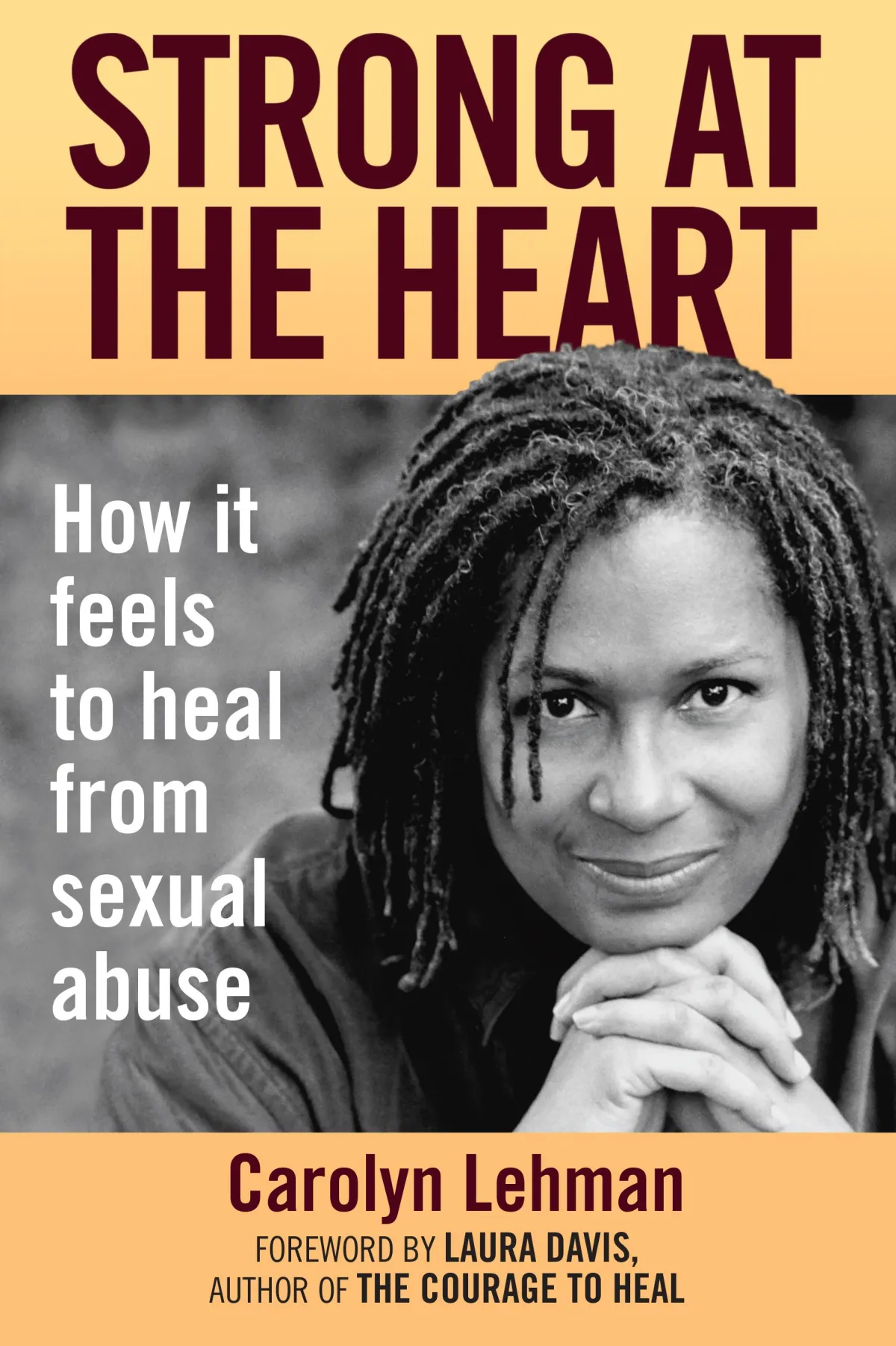
Earlier this summer a reader in a small cattle town in a rural Western state wrote a letter on a typewriter and mailed it to my publisher, Farrar, Straus and Giroux in New York. The letter went on to my editor, Melanie Kroupa, in Boston. She faxed it to me in northwestern California.

Here, with the writer’s permission and with identifying details taken out, is her letter:

“I just read Carolyn Lehman’s wonderful book, Strong at the Heart: How It Feels to Heal from Sexual Abuse. I love this book and I found it to be very helpful. I was sexually abused some of my childhood years and when I was 14. I go to the library often and look for books on this subject. There aren’t many, not at my library. When I found this book, at first, I was afraid to read it. I read it with caution, because I didn’t know what to expect. I read the whole book in an hour. I even had to stop and wipe away tears every now and then. This book, the people who wrote their stories…they’ve inspired me to pick up the shattered pieces of my life and move on. It will be a long healing process. This book has helped tremendously.”

When I wrote asking her permission to quote her on this site, she responded in part:

“Please know how grateful I am that you put such a book together–it’s an incredible feeling, knowing that I’m not alone. ”

And isn’t that the heart of it? That feeling of isolation is the worst. Yet we are really not alone at all. We are surrounded by other survivors of sexual abuse. It’s the stigma of abuse that prevents us from connecting with and supporting each other. I’m so glad this reader found an opening at her public library and role models for her own healing.

She also said, “I was amazed that an author wrote to me! A famous person!” (Well, hardly famous.) Authors and editors and publishers are human beings. Her letter let a lot of people involved in the publication of Strong at the Heart know the impact of their choice to publish this book.

She’s right, too, it can be hard to find good resources. Letters like hers give support to those with the courage to publish books that are needed, not just potential blockbusters. I wish librarians and booksellers could hear from readers like her, too.

Here are some of my favorite books and films about healing from sexual abuse.

Comments

stellar review

This just in: I just opened a copy of the March issue of Play Therapy, a magazine for mental health professionals who work with children and teens.

There, on page 32, is a great review of Strong at the Heart in which a therapist describes using the book with her young teen clients.

With the author and publisher’s permission, I’m pasting the review in full below.

Jenner, Sheena, Tammy, Jonathan and all—when you read this, you’ll see the far reaching impact of telling your story!

the review
STRONG AT THE HEART: How It Feels to Heal from Sexual Abuse
By Carolyn Lehman, MA
Reviewed by Terry Abell, MEd, LMHC

This five star book is a pleasant surprise, easily read, and displays survivor photos. Chapters are written by survivors. This book presents diverse populations, including males, females, Euro, Latino, Native, and African American cultures, and discusses variations of abuses, including rape, abduction abuse by a priest, and scenarios involving family, date rape, and males abused by females.

Narratives include initial abuse, effects on survivors, and resolution. Sometimes, help was accessible immediately, sometimes not. Sad experiences were offered regarding pre-recovery. Disclosures of substance abuse, suicidal ideation and denial are presented honestly.

When I used this book with clients, I asked to read them a story, stopping to process at intervals. I first used this book with a female ninth grader recently assaulted by an adult male. I selected appropriate stores, which helped her finally acknowledge that the assault was not her fault. I also used this with a 12 year-old with a lifelong history of on-going abuse. We read stories and talked about ways these matched her story. It provided exposure to others who survived, moved on to heal and reach out. She is now in a safe, nurturing environment, making strides and ready for group work. This book provides a stepping-stone towards group.

I intend to use this with survivor groups in the future. Many of our clients are exposed to abuse, directly or indirectly. This book is a great tool and should be added to any counselor’s arsenal.

Comments

who you are

You might be a first time visitor to this site, or an old friend coming back to see what’s happening with Strong at the Heart, or someone who needs information now.

It’s been a year and a month and a week since this website went up and I started this book blog.

Blogging—as many have observed—is both an intimate and an annonymous experience. Well, I’ve chosen to not be annonymous. But who are the other participants?

Who comes to this website? Besides you, who reads this blog?

feedback

Of course, I hear from many of you via email and posted comments. So I know my sister visited the site when a friend asked her for a good book on sexual abuse for very young children—the day after I put up the review of Mia’s Secret.

Several adult men have written about the effect of reading the book or seeing the photos. As one put it, “This is the first time I have looked into the face of another man who was sexually abused.”

Researchers and librarians write to say they find the booklist helpful. Teens trying to get out of abusive situations, survivor activists, therapists, concerned parents, children’s book folks–you are a varied group of correspondents. I enjoy hearing from all of you.

what you want

My stats program lets me see what terms visitors have typed into the search engines that bring them to these pages (but not who the visitors are, of course).

stories of strong teens
child abuse true stories
how do you heal from sexual abuse
recovery from molestation
Marisca Hagrity (our pages are linked—she recommends Strong at the Heart!)

The above are some of the most frequent search terms. Then there are the heartbreakers:

how to get help for teen offenders
help for sibling abuse
how to stop incest
can kids heal from molestation

These are the courageous kids and adults who are looking for resources and referrals. It’s a privilege to be a stop on their journeys.

Then, of course, there are a few lost souls looking for sex sites. But I figure that anyone who makes it here may encounter information they didn’t know they needed to find.

where you go

After this blog and the home page, the most popular pages are books and films and favorite websites. But a constant stream of visitors explore all the pages. The help pages are popular as is the order page (thank you!) and the bio page (go figure!)

where you come from

Links, of course, bring me a lot of readers from sites like Wikipedia where Tony Sandal started an excellent—although constantly changing—book list. Rape Crisis centers link to these pages, as do book blogs and interviews like Cynthia Smith’s excellent pages on children’s authors. Awards lists also bring me readers. And I’m always happy to see new blog links and feeds.

Search engines postfixes include uk, ca, de, ie, ro, in, no, pl, th, se, il, fr, tr, es—and on and on. Some hits come through translation services. The readership is truly world wide.

namaste

When I started blogging I thought I would simply record the first year in the life of the book. But plans have a way of changing.

I didn’t even notice the first year anniversary (October 27th) I was so busy preparing to speak at Healthy Teen Network, California Library Association, and the Instituto Familiar de la Raza in early November.

Interest in Strong at the Heart is—well—as strong as ever. The readership on the site continues to grow. The book is selling well and reaching new audiences. I learn so much from the people who write to me.

So I’m keeping on.

Thanks to you for reading. And thank you to all who write in. I am grateful for every person who makes it to this site.

Comments (2)

letters vs email

Twenty years ago I wrote Promise Not to Tell, a novel for children about a girl who tries to tell about being molested. For years I kept one particular letter from a young reader on the wall above my computer, a reminder to myself of the reader at the other end of the book writing process.

Now I am hearing through this website. Web inquiries are a very different kind of reader response, but like letters in the old days, they let me know the impact of Strong at the Heart on readers.

It might be the speed and anonymity of email, maybe just better distribution of Strong, but I am hearing from a wider range of readers. Our conversations are much more intimate than reader letters I received in the past.

My correspondents include male and female survivors of different ages and stages in dealing with sexual abuse, some asking for advice on getting out of ongoing abuse, others wanting to share insights learned from years of their own work.

Therapists write to tell the ways that they’ve used the book with clients. Other writers and survivor activists find me through the site. And there are many people who write to ask me to speak in their community. Recently I heard from the organizer of my high school reunion who found me through google and discovered that we are both writers.

Comments (1)

the therapist

For a book that was published on a mainstream young adult list, Strong at the Heart is having a very interesting trajectory.

A friend just sent me a copy of a long review that was published in the current issue of The Therapist, the bi-monthly journal of the California Association of Marriage and Family Therapists.

Since the book came out I’ve been hearing from therapists who have given it to clients–both young and old. So I am especially pleased about this review. One therapist told me that the photographs have a huge impact because they counter the fear and shame that keep so many people from being able to talk about their own experiences of sexual abuse. Another told me that she suggested a young client read Tammy’s story, but the girl chose to read Sheena’s instead because she thought Sheena was cool. The result was still what the therapist had hoped for, her client was able to talk first about Sheena’s experiences, then about her own.

When I first conceived the book, I saw it as a way for survivors to speak directly to other survivors–and I imagined this encounter happening anonymously in school and public libraries. That Strong is becoming a tool in therapists’ toolbox is a great bonus. It means that the stories reach even more readers.

Here’s the last paragraph of the review in The Therapist, by Carly Perlman, M.A., MFT:

Strong at the Heart is a wonderful and empowering collection of survival experiences of sexual abuse. It should be included in the resources for young adults and adolescents who have struggled in recovery from sexual abuse. Any reader will likely see a part of their own experience reflected in one of the stories. It demonstrates the reality for survivors of sexual abuse: It isn’t an easy path of healing, but it is attainable.”

in person

One of many sweet encounters on my trip back east was breakfast with a reader who has been corresponding with me since shortly after the book came out. He and his wife took me out to breakfast the morning after I arrived in Burlington. Yes, his wife. He’s a grown man and a grandfather! We ended up in a rich three-hour-long conversation that spanned our many experiences and expanded my understanding of how profoundly the stories of Akaya, Jonathan, Tino, and the others affect the lives of people I never imagined when the project began.

Comments

what came of Black Oak

Dear Readers–There’s a quiet little discussion going on in the comment section of the Black Oak blog entry from earlier this week. The latest entry is intriguing, but easily buried, so I want to post it here as well.

What happened is this. A mother and daughter came to the book event at Black Oak Books where I presented Jonathan and Sheena’s stories and what I learned in the process of writing the book, followed by a dynamite discussion with Akaya (cover girl), her support group and the audience.

On the way home, the teen told her mother that she’d been raped several years earlier, when she was twelve. The mom posted this experience on the blog. She wants readers to know that the book has an impact and that it opened communication between her and her daughter.

Now a therapist is commenting. She asked me to post her e-mail on the blog so I am putting it here:

Hi Carolyn,

That is a very moving letter with some important information. It always amazes me how the developmental issues that go with adolescence make it almost impossible for teens to see their parents as parents see themselves.

When I first read that her mother had been abused I assumed the daughter was sparing her mother’s feelings. Instead she assumed that her mother would feel about her the way she (the girl) felt about herself.

Some people theorize that survivors blame themselves as a means of gaining some control. It’s an interesting thought, but I don’t think it’s entirely true.

People’s reactions to the book intrigue me and there is a lot to learn from them. I’m not surprised the daughter said nothing about her being raped to her therapist. Kids hint and wait for you to speak the unspeakable. Their shame keeps them silent. Once you, as the therapist, say it, then it is out of hiding. Too many mental health practitioners think they will be “pushing” if they bring it up. I don’t think that is true unless they bring it up before a relationship has been established. I recall one mother who was having a terrible time with her 3 yr old boy. She couldn’t set limits on him at all and he was a tyrant. She was overwhelmed by him. She seemed actually scared of him. It finally dawned on me how much she was projecting onto this little boy and I asked her about the child’s conception. It was no surprise to hear he was the product of a rape. She would not have volunteered this information though. Everything changed after that. She was able to see him, not his perp father. Anyway, it is truly an adventure.
–Carmela

Comments (3)