




Archive for media

when survivors don’t speak up

As a survivor of childhood abuse, do you ever find yourself accommodating obnoxious behavior? Putting up with crap you really needn’t? Do you trash yourself over it? Or do you give yourself a break?

My friend poet Molly Fisk wrote and performed a fine radio segment on Stockholm Syndrome in her experience as a survivor. (Her first book of poetry Listening to Winter is one of my favorites and has some great insights into survivor experience.) This is what she wrote:

Stockholm Syndrome
, by Molly Fisk

So here’s the story. Last week I went out to dinner with some good friends. During the course of the meal, I said that an organization where I volunteer was going to have a sexual harrassment training. The man I was sitting beside also volunteers there, and without missing a beat he said, “I’ve always wanted to get sexually harassed, but no one ever chooses me!”

Now, this is a stupid thing to say. Anyone who thinks it would be fun to get sexually harrassed a) has probably never experienced any kind of harassment, and b) is probably not a woman. Because women know the score about sexual harassment. It was also a fairly hard thing for me to hear, since I was raped as a child, and rape is harassment in its extreme form.

The guy, like many guys before him, was responding to the word sexual, and discounting the word harrassment - making a kind of guy-like joke out of the thing. A different kind of man might have asked why we needed the training, or engaged me in talking about it more seriously.

What’s interesting to me, though, is not his reaction, but mine. I didn’t say, “Shut up, you bozo” in a friendly tone of voice. I didn’t get ticked off and give him the double-barrel-feminist-shotgun response, explaining, with dripping sarcasm, how offensive it was for him to say this, not to mention unkind. I didn’t admit that I was one of the women who had spent almost a year organizing the training.

I did this really weird thing: I laughed loudly and played along. I patted him on his knee and said in a sexy voice that if he ever wanted some sexual harrassment he should just let me know. Even as I was doing this, part of my brain was yelling in outrage, “Are you crazy?!!? What are you doing? You’re supposed to help stop assinine reactions like this, not foster them for God’s sake!”

It took me three days and one sleepless night to sort it out. He’s a big guy, my friend, and he was crowded in next to me in a booth. I wouldn’t have been able to get out if I had wanted to. He has a big-guy voice. I’d been having a hard day and was exhausted before we even sat down to eat. I think those factors greased the way so that I slipped into the prudent response of my childhood when a large man said anything, which was to agree, no matter what I thought, so I wouldn’t get hurt.

There’s a name for this: it’s called Stockholm Syndrome, after a Swedish bank robbery in 1973 when hostages were taken. It refers to the allegiance of victims to their perpetrators, when those perps have been in control for long enough and the violence or threat of violence has been great enough - the most famous example being Patty Hearst joining her kidnappers in the Symbionese Liberation Army and calling herself “Tanya.” It’s prevalent among child abuse survivors, battered women, and other victims of violent crimes, as well as prisoners of war.

Once I had figured out what was going on, I stopped beating myself up for being a jerk. I’m going to stop beating my friend up for being a jerk, too. People aren’t always careful about what they say, unless they’ve been taught that it matters.

Gentlemen, please consider this story your training in the fact that it matters. It really matters. Don’t be a bozo and crack jokes about it.

Molly’s essays can be heard at KVRM on Thursday nights at 6:55 pm, Pacific time, closing out the News Hour. (89.5 FM on your dial in much of Northern California) You can read them all and listen to many of them at her website.

I receive Molly’s essays via email, and you can, too, by writing her at molly@mollyfisk.com. Receiving these essays via e-mail is free, but I encourage you to support Molly’s writing with a $36 subscription for 2009; I do each year. More about this on her website listed above. Molly’s CD of radio essays, Using Your Turn Signal Promotes World Peace, is available at CD Baby.

Filed under: books, media, men and boys, websites and weblogs
Comments (0) | Email This Post | Print This Post | 580 views

This just in . . .

I just received in the mail a hard copy of The Prevention Researcher, “a multidisciplinary journal focusing on successful adolescent development and at-risk youth.”

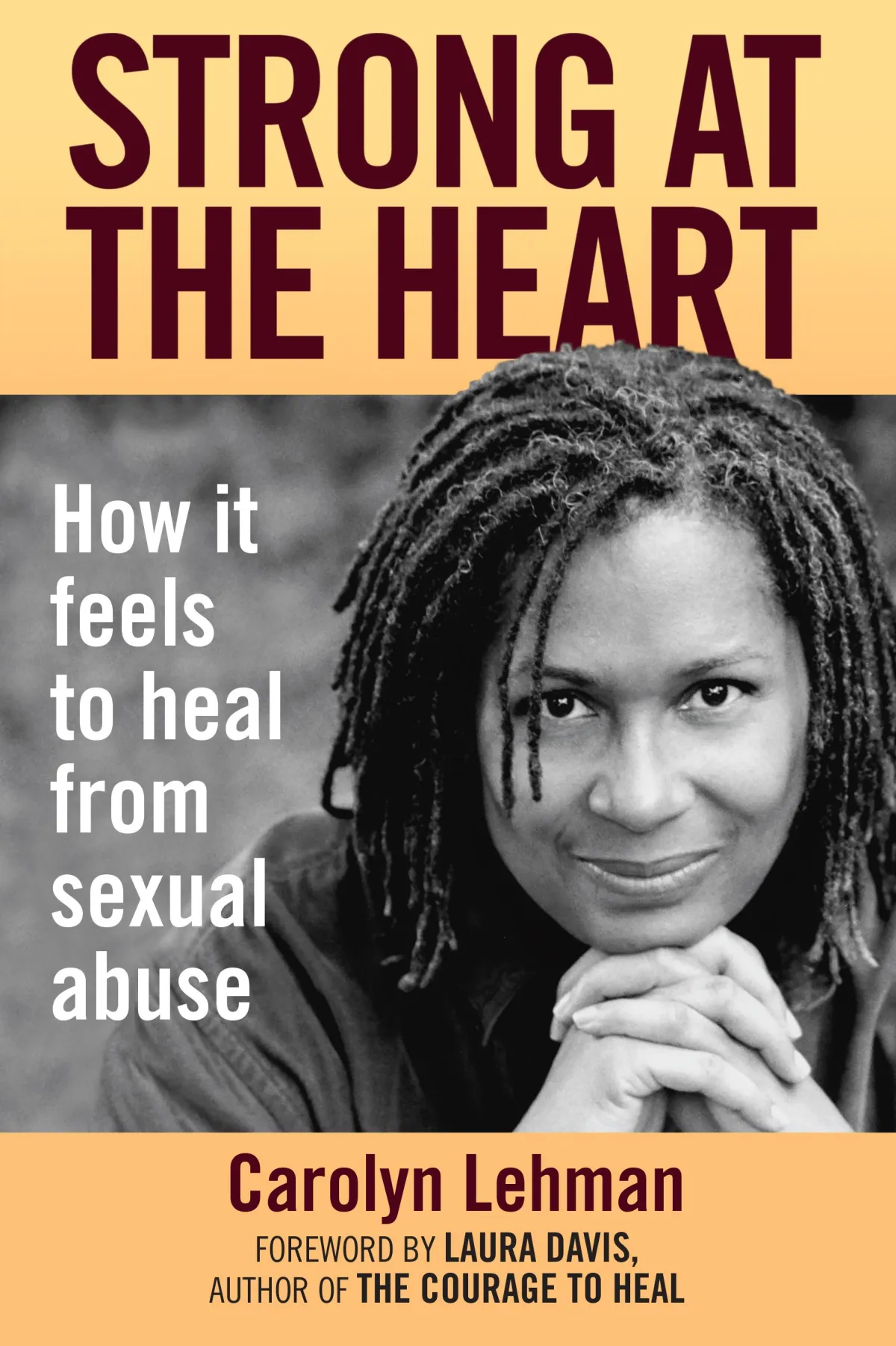
There–on pages 11 and 12–is the most comprehensive and thoughtful review of Strong at the Heart ever. The reviewer, Dr. Jacqueline Golding, is writing here for a professional audience. She really understands the power of survivors defining their experience.

You can read the full review on line. Here’s a snippet from the end:

“In addition to being a wonderful resource for adolescent and adult survivors of sexual abuse, Strong at the Heart can be of great use to people who have not been sexually abused, but are close to someone who has been. … A survivor’s partner, friend, or parent can use Strong at the Heart to better understand and support the healing process of the person close to them.”

The current issue of The Prevention Researcher can be read on line. Their website has an extensive archive of articles on healing and the prevention of trauma–some of which require a fee to download.

picturebooks

BTW, the reviewer is herself an author. Healing Stories: Picture Books for the Big and Small Changes in a Child’s Life is an annotated bibliography of over 500 picture books. The author is a clinical psychologist and a mother who has a clear sense of what resources will be helpful for parents, counselors and teachers who work with the very young.

Filed under: media, reviews
Comments (0) | Email This Post | Print This Post | 454 views

male survivor film

Here’s something you might want to check out. A young filmmaker is producing a feature film that examines male experience of sexual abuse within the orthodox Jewish community.

I haven’t seen the film but have visited the website for Narrow Bridge http://www.narrowbridgefilm.com/. From his description and the website itself, the film appears to be about a religious young man in a new relationship who must come to terms with abuse by a trusted man in his childhood.

Filed under: abuse by clergy, media, men and boys, websites and weblogs
Comments (4) | Email This Post | Print This Post | 446 views

after long silence

It’s been way too long since I posted here. What has absorbed me is my involvement in digital storytelling. This began as an invitation a year ago from Amy Hill of Silence Speaks to participate in a digital storytelling workshop.

Digital Storytelling gives ordinary people the skills to make short, personal QuickTime/DVD movies about their experience. What I find fascinating is seeing what people do when they have the power to communicate their inmost experience in video format without the mediation of editors, journalists, filmmakers, etc. The stories are incredibly moving and often reveal a great deal that gets lost in slicker productions.

Amy’s site, Silence Speaks, contains the stories of men and women, boys and girls, who are overcoming sexual, physical and emotional violence in their lives. The stories speak about facing racism, making it through foster care, being abandoned by family after reporting abuse. It’s heavy stuff, but also very inspiring. You might want to check it out.

home town

What I’ve done with it this spring is not abuse related. Working with a grassroots women’s health organization, another writer and I developed a program for cancer patients to help them tell their stories. We were fortunate in being granted the funds to bring the Center for Digital Storytelling to our small town for a three day workshop so that the participants could turn their written scripts into 3 minute movies.

If/when the stories go up on line, I’ll post a link for you here.

And, yes, what got me involved was my own cancer experience. I’m healthy now and very happy about it.

Filed under: media, websites and weblogs, writing
Comments (0) | Email This Post | Print This Post | 287 views

stellar review

This just in: I just opened a copy of the March issue of Play Therapy, a magazine for mental health professionals who work with children and teens.

There, on page 32, is a great review of Strong at the Heart in which a therapist describes using the book with her young teen clients.

With the author and publisher’s permission, I’m pasting the review in full below.

Jenner, Sheena, Tammy, Jonathan and all—when you read this, you’ll see the far reaching impact of telling your story!

the review
STRONG AT THE HEART: How It Feels to Heal from Sexual Abuse
By Carolyn Lehman, MA
Reviewed by Terry Abell, MEd, LMHC

This five star book is a pleasant surprise, easily read, and displays survivor photos. Chapters are written by survivors. This book presents diverse populations, including males, females, Euro, Latino, Native, and African American cultures, and discusses variations of abuses, including rape, abduction abuse by a priest, and scenarios involving family, date rape, and males abused by females.

Narratives include initial abuse, effects on survivors, and resolution. Sometimes, help was accessible immediately, sometimes not. Sad experiences were offered regarding pre-recovery. Disclosures of substance abuse, suicidal ideation and denial are presented honestly.

When I used this book with clients, I asked to read them a story, stopping to process at intervals. I first used this book with a female ninth grader recently assaulted by an adult male. I selected appropriate stores, which helped her finally acknowledge that the assault was not her fault. I also used this with a 12 year-old with a lifelong history of on-going abuse. We read stories and talked about ways these matched her story. It provided exposure to others who survived, moved on to heal and reach out. She is now in a safe, nurturing environment, making strides and ready for group work. This book provides a stepping-stone towards group.

I intend to use this with survivor groups in the future. Many of our clients are exposed to abuse, directly or indirectly. This book is a great tool and should be added to any counselor’s arsenal.

Filed under: awards and honors, media, reader response, reviews
Comments (0) | Email This Post | Print This Post | 332 views

volver

If you want to see a sweet film featuring a strong survivor, insight into the ways incest affects families through the generations, a sense of humor, and vibrant faith in the ability to face the pain of the past and heal, then check out Volver, by Spanish filmmaker Pedro Almodovar.

Penelope Cruz plays Raimunda, a smart, attractive, and hard working single mother who lives in the city with her pre teen daughter Paula (the utterly convincing Yohana Cobo). Cruz’s character is from a small, claustrophobic town where–apparently–both her parents died in a fire.

The story is set in motion when Paula’s stepfather, Paco, tries to assault her. The girl grabs a knife to defend herself and in the struggle, Paco is killed. When Raimunda finds out what happened, her mother instinct kicks in (although you wonder why she put up with the louse for so long). She reassures Paula and sets out to protect her daughter by disposing of Paco’s body.

where sweetness lies

It isn’t as ghoulish as it sounds, because the focus of the movie is a loving look at the strengths of these and other ordinary Spanish women, their sisters, neighbors and friends. Yes, they lie, they cheat a little here and there, but they are up against a world that would run them over. For all the hardship, there is also deep commitment and the willingness to help each other through life’s travails.
In Spanish, “volver” means to turn—and also to return. There are many turns and returns, from the spinning wind turbines in the background as the characters make the journey from city to small town to city again, to the return of Raimunda’s mother, to the replaying of family themes down through the generations.

spoiler alert

There is also a wholly satisfying scene in which Raimunda confronts her mother for not protecting her from incest as a child. It is so very human in the pain, the guilt, the anger, and the capacity to reconnect after long estrangement. If this is an issue for you, you gotta see these women struggle through it.

temporary cynsations home

Cynthia Smith’s wonderful blog on children’s and young adult books has temporarily moved to her husband’s site. You can still read her interviews and insightful comments on the field.

The dynamite interview she did with me about Strong at the Heart is still accessible in her archive.

Filed under: media, websites and weblogs
Comments (0) | Email This Post | Print This Post | 293 views

survivors and heroes

Wednesday morning I grabbed a cup of tea, put a pile of books I hoped to talk about on my work table, and dialed in to Kathleen Brooks’ studio phone line.

A few minutes later we were launched into an hour long, intimate discussion about healing from abuse, role models, stereotypes of survivors, and the writing and publication of Strong at the Heart.

Our conversation was broadcast live on the Internet and is now archived at Kathleen’s Ethical Life site.

You can play the segments one at a time there. I had fun exploring her archive and listening to the voices of leaders in the child abuse prevention, treatment, and advocacy fields.  The site is a treasure trove.
As an interviewer, Kathleen has a gift for putting guests at ease. She asked questions that I’d never been asked before.

If you are curious about the stories behind this book, legal issues around publishing survivors’ stories, or the stereotypes that can stand in the way of healing, you might want to check it out.

pretty girl

For a thrilling YA read, with an unforgettable survivor/hero, be sure to pick up Laura Wiess’ Such a Pretty Girl.

No stereotypes here. Fifteen year old Meredith is a complex and determined teenager who is furious that the man who molested her—her own father—is out on parole instead of serving his full sentence. Not only that, but her clueless mother wants him back in their lives!

Meredith is the antithesis of a passive victim. She has more than her share of challenges, but she never gives up and she finds allies in her struggle to protect herself and other kids. There is lots of action, suspense and danger before the stunning climax (don’t try this one at home, kids). Definitely a thriller.

Filed under: books, media, websites and weblogs
Comments (2) | Email This Post | Print This Post | 304 views

listen to this

Here’s something well worth checking out. Dr. Kathleen Brooks’ Breaking the Conspiracy of Silence broadcast on her Ethical Life website is a weekly Internet show dedicated to “providing a safe forum to get informed, share and participate in preventing, recognizing and reacting safely to child sexual abuse.” A psychologist and survivor herself, Dr. Brooks interviews authors, researchers, survivors and others involved in child sexual abuse treatment and prevention.

This week’s show was a thoughtful and intimate conversation with Julie Brand, author of A Mother’s Touch, a book about mother/daughter incest.

stay tuned

On Wednesday, January 25—from 2-3 Pacific Time—I’ll be Kathleen’s guest. We’ll be talking about Strong at the Heart and about sexual abuse survivors in books for teens and children. I hope to spend time on why these books are needed, how Strong at the Heart came to be, and some of the back stories of the people in the book.

If you miss the live interview, you can listen from the show’s main page until the next Wednesday.

After that, our conversation will be downloadable from the archives.

BTW, the archives contain some real jewels, in depth dialogs with leaders in the field including Margot Silk Forrest on having a happy life after abuse and Dr. Vincent Felliti, author of the Adverse Childhood Experience study. His groundbreaking work links childhood trauma to physical health outcomes in adulthood and has provided the data needed to show that child abuse is a public health issue of staggering importance.

what’s next

The author on January 31st is Saydah Zekee, who will speak on child sexual abuse in the African American community. I am bookmarking this site as a great resource.

Filed under: books, media, websites and weblogs
Comments (0) | Email This Post | Print This Post | 312 views

sold!

I just finished reading Sold, a free verse novel by Patricia McCormick, published by Hyperion for young adults.  It’s the first book of fiction–or nonfiction–that I’ve seen for teens that deals with child sex trafficking.

The author has done a fantastic job.  She really gets the accomodation that sexually exploited kids must go through and the role of hope in keeping a sense of self alive, even when that hope is misplaced.

sold-jacket001.gif

A lot of fiction that treats sexual abuse is from an “outsider” perspective.  Even when it is written in the voice of a young survivor, the characters and action can seem to fulfill outsider needs to feel pity and to rescue.  And I have to say there is a powerful outsider thread in Sold.

Lakshmi is a young Tibetan girl sold into sexual slavery in India by her stepfather to pay his gambling debts.  She struggles against her fate and when she is forced to comply she finds reason for hope in the small kindnesses around her.  If you’ve seen the movie Born in the Brothel, you’ll have a good idea of Lakshmi’s world.

The research behind the story is scrupulous.  Ultimately, Lakshmi’s only hope is an American rescue project.  Her struggle is to take the step that will allow her would-be rescuers to help her.  And this is her struggle, her choice.

Tough but good.  Check it out.

Filed under: books, media
Comments (2) | Email This Post | Print This Post | 495 views

survivors and sterotypes

Where do you get your image of who and what survivors of sexual abuse can be? Do the survivors portrayed in books and movies accurately reflect real people’s experiences–or are they projections of the creators’ own fears and beliefs?

This summer I sat down with recent young adult novels that have major characters who are survivors of incest, sexual abuse, and rape. It was eye opening to look at these books side-by-side and consider just what they tell young readers about surviving abuse.

“Hero, Victim or Monster? an author looks at depictions of sexual abuse survivors in YA fiction” was just published in School Library Journal.

Here are some exerpts, but you can read the whole article on line.

At age 10, Jonathan was sexually abused by the family priest. “When I started middle school and realized what sex is, that’s when I really started having a problem with this,” Jonathan, now a young adult, told me. “What happened with Father Jim made me feel like a lesser person.” Jonathan turned to alcohol, drugs, and aggressive behavior to cope with his shame and prove that he could be “cool, a real man.”

I spent several days with Jonathan when he was 17, interviewing and photographing him for Strong at the Heart: How It Feels to Heal from Sexual Abuse (Farrar/Melanie Kroupa Books, 2005). My purpose was to show—through their own words—how real teens and adults overcome childhood sexual trauma. I wanted readers to have a clear picture of what sexual abuse is, who survivors really are, and how people make choices that lead to a healthy outcome.

The survivors I interviewed have done a substantial amount of healing and come from a wide range of cultural, economic, and racial backgrounds. Our conversations showed me how much we have to learn, if we will only listen. I saw how teens hunger for stories about others, like themselves, who have coped with traumatic experiences. They also gave me new criteria for evaluating fiction that depicts this all-too-common experience of childhood and adolescence.

You might expect that trauma this pervasive would be examined—and its impact explored—in literature for the very people who are living it. Yet few of the teens I talked with had seen their experience reflected in a book.

titles

Books discussed in depth include two by Chris Lynch, Inexcusable and Sins of the Fathers, Laura Weiss’ forthcoming Such A Pretty Girl, R. A. Nelson’s Teach Me, and Beth Goobie’s The Place Where the Losers Go.

There’s also a list of some excellent older books by Jacqueline Woodson, Chris Crutcher, Cynthia Voight and Cathy Adkins.

To evaluate the books, I used four criteria that came from discussions with young survivors. I’d love to know what you think!

Filed under: books, media, writing
Comments (4) | Email This Post | Print This Post | 391 views

Next Page »