




reader review

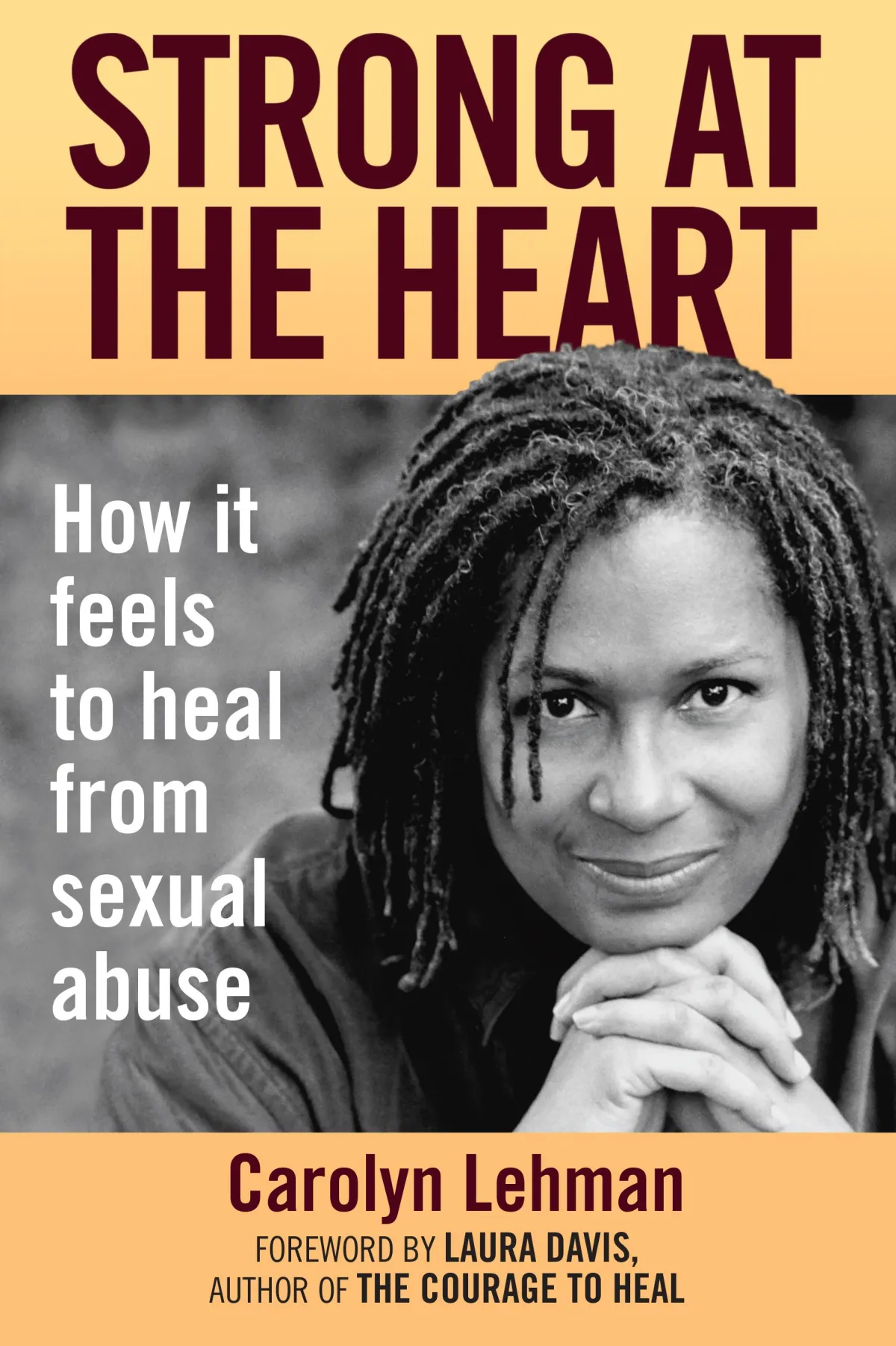
When a book first comes out, there’s a rush of professional reviews. But my favorite kind, by ordinary readers, keep coming. Sometimes it’s an email or letter to me personally. Here’s one that appeared on Ciao!, via Bing, written by a young woman in England:

Who This Book Is For

This book is for anyone who has ever experienced child abuse, knows someone who has experienced it, or for anyone who wants to know what it feels like, and is curious. This book is especially for those who need inspiration to make it through their own experience, and just learn to heal. I think this book is a really great thing, and has helped a lot of people, so far.

Everyone Has A Story

This book is a perfect example of how everyone has a story. As people we all get so concerned about our own lives, that we forget to hear everyone else out around us.
This book speaks of not only the hardships in others lives, but also how they managed to gather strength and find a way to get their life going in a positive direction. There are a few peoples stories in this book, it starts with the abuse they went through, how it all happened, what was done about it, the support they got, and where they are at now with life.

Every race Every Face

I love how every race is represented in this book, and how it just shows that anyone can go through sexual abuse, and how anyone can be an abuser. This book shows abuse from every direction, from strangers, from a priest, from your own family. Its not just showing one type of abuse, its from minor abuse to serious abuse, and most importantly this book shows the damage and the healing process.

Get Help

I feel that this book also sends out a help message. For anyone that you know that needs help, there are resources, and also the powerful words of people who have been there before. People tend to shy away from sexual abuse since its such a hard topic, but i feel that everyone needs to read a book like this! We all need to know, and be prepared to help someone in need, and this book is a perfect way to become a little more knowledgeable for some who have never been talked to about sexual abuse before in their lives.

Central Message

You can make something good of yourself no matter what happens in your life. If you stay positive and always stay focused on your goals you can make it is what i truly took from this book. The message is so powerful and motivating….

Final Thought

This book is a must! You have to read it, you cant stop once you start! It will catch your attention, and it is truly so very inspirational. This book can motivate you to reach out to someone else, or save yourself. It focus’ more on the positive then on the negative, and that is what i like, because its not so dark and depressing, but more interesting and inspirational. Everyone needs to get their hands on this book!!

Thanks Alexis95! I’m glad you like Strong at the Heart and appreciate that you wrote about it so well. It’s always gratifying for a writer when a reader really understands a book.

Filed under: reviews
Comments (0) | | | 675 views

when a parent was sexually abused as a child

On the young feminist blog fbomb there’s an article that examines the developing awareness of a young woman whose mother was a survivor of sexual abuse.The blog post includes an essay that the author wrote three years ago, when she was 17.

Liz P talks about her feelings of isolation and the effect that knowing her mother was abused had on her own childhood. Many of the same feelings of isolation and “this doesn’t happen to normal people” that survivors of abuse experience, resonated in her own, second generation experience.

She looks at, among other influences, the role of a children’s book, Promise Not to Tell, that I wrote years ago. It was given to her to let her know “how something like that can possibly happen.”

Liz’ post raises a little-discussed consideration. When a parent has been abused as a child, and I’m thinking here of those of us who have done significant healing, what is the impact on his or her own children?

A lot has been written on the generational impact of the Holocaust, how the secondary trauma–and the secondary resiliency–gets expressed in the second and third generations. And the meme of “abusers were once abused themselves” is everywhere (not so frequently cited is that the great majority of child abuse survivors do NOT go on to abuse children).

But what about the secondary trauma of having a parent with PTSD or other post traumatic issues? What about, as Liz points out, the disruption of normal, and expected, family relations? What other ways are the lives of daughters and sons affected–for worse and for better?

I think this whole consideration is under explored. We know how prevalent child sexual abuse is. We know that it has profound consequences for those who experience it. A lot of work has been done on how people heal. But the secondary trauma/adaptation issues are playing themselves out without much notice–yet.

Filed under: books,media,reader response
Comments (2) | | | 1,463 views

stop the violence radio

If you want to hear the voices of real survivors of childhood sexual abuse, talking frankly about what happened to them and how they heal, check this out. Cliff Berkowitz, founder of KHUM in Northern California, DJs an eclectic morning show. For three weeks each November, he uses his show to raise awareness of interpersonal violence and healing. His Stop the Violence campaign is an amazing festival of survivors, tough reality, and hope.

AND it’s all archived so you can access the interviews. Arturo and Akaya from Strong at the Heart were interviewed for a half hour each on November 16th and 17th. Arturo has some tough and very real things to say about being a survivor of male rape. Akaya’s interview speaks eloquently about how children dissociate–”forget”–abuse, only to have the memories come back in adulthood.

Cliff also interviewed me on November 9th.

The three week campaign also covers healing from domestic violence, genocide and war trauma. A fascinating interview you’ll find on that page is an interview with Courtney Weaver, a blues singer who was shot in the face by her domestic partner a year ago. She is recovering and is back on stage. Indomitable woman.

Today’s segment is a two hour panel with some amazing folks. Sam Oliner is a Holocaust survivor who has dedicated his life to studying altruism; he escaped the ghetto and was aided by a Christian Polish couple when he was twelve. Marlon Sherman (Lakota) talks about violence in, and against, the Native American community. Courtney Weaver sings four songs, two near the beginning about violence, and two at the end about healing, one of them written just for this campaign.

It’s worth a listen.

(re-posted from 11.19.10)

Filed under: events,media,men and boys
Comments (0) | | | 716 views

something you can do

Here’s a nifty project that needs the attention of people who want to stop child child sexual abuse, raise awareness of the issue, and support survivors in their healing

Dr. Michael Irving has been working on a monument for survivors. His metal sculpture, built on the artwork of survivors, needs to receive votes at the Aviva Community Fund.

Here’s what he has to say: “We hope to highlight and honor the issues survivors of child abuse face: the confrontation with the angst and legacy of child abuse; the struggle to find answers and understanding; the difficult journey of healing; the value and power of connecting with others; the movement into healing and recovery; the freedoms and victories that are the rewards of perseverance.”

To vote, you must register at the site, which requires navigating a few pages. I returned to the voting site for the survivor monument by searching “monument” after registering. You can opt out of receiving any emails. You can vote up to ten times in any round (this project is now in the semi-finals) as long as you vote on different days.

It looks good to me. And can you imagine, a solid, artistic memorial to all that survivors have gone through!

Filed under: media,men and boys,uncategorized
Comments (0) | | | 705 views

Japanese edition

Just now I opened a puffy envelope from McMillan, the company that now owns my publisher, Farrar, Straus and Giroux. Inside, amazing, four copies of Strong at the Heart in Japanese!

This edition has two new interviews, one at the beginning and one at the end of the book. Each is with a young Japanese woman. I can’t wait to take it to one of my Japanese speaking friends so I can hear what these new people say!

The translator, or perhaps the author of the Japanese material is, Atsuko Konishi. I haven’t found her on line yet, but I’ll let you know when I do. On Japanese Amazon, it is being marketed with a book called Stand. The cover of Stand has a photograph that is also used in one of the new chapters—an intriguing looking photographer looking out at the reader with her camera covering one eye—a little like the half face of Akaya on the cover of the American edition.

It’s really quite wonderful to realize that this book will reach a whole new audience of child sexual abuse survivors and their supporters, to see the photos and to know that eleven amazing survivors’ stories are in front of me (nine of which I know so well) in a text I cannot yet read!

Filed under: awards and honors,books
Comments (1) | | | 1,028 views

tender morsels

If you like to read fantasy, fairy tales and books that honestly address issues that child sexual abuse survivors face, you should not miss Tender Morsels by Australian author Margo Lanagan.

Loosely based on the Grimm Brothers fairytale Snow White and Rose Red (which is NOT the Snow White of Disney fame), this young adult novel is a home run for adult fantasy readers as well. You have to be a little tough to read the first few chapters which include a positive scene of sexual awakening and the not-so-graphic depiction of incest and rape.

But then, oh, my, Lanagan uses fantasy memes to explore both the saving grace and the limitations of dissociation. Now that is inspired.

Liga, the girl who is abused and later raped, escapes this damaging world by going into her own personal heaven–a safe, if limited, world of her imagining. There she raises two daughters, the very real children of sexual assault who are also the charming and loving sisters of the Grimm story.

The trouble with Liga’s dissociation from the world is that her children grow up, and they begin to differentiate themselves from Mom. It is through the crusty dwarf of the fairytale that her daughter Urrda enters the real world. Urrda eventually leads mother and sister across the amnestic barrier as well.

It is a hard adjustment to a place where people can be cruel as well as kind, which life is uncertain, where futures can be made and love truly felt. Lanagan has done a rare thing, mapping the emotional territory of dissociation and recovery as she tells a compelling fantasy.

You can read my full review for School Library journal at Amazon. But consider purchasing this book at one of your local independent bookstores. They need our support.

Filed under: books
Comments (0) | | | 1,081 views

yet another escape from a polygamist cult

Okay, this is the third novel about a young teen girl who escapes from forced marriage in a polygamist cult that has cross my desk in the space of a year. Keep Sweet, by Michele Dominguez Greene, is a good read. Like the other two I’ve reviewed here, this book has its virtues, but laid side by side all three beg the question “Why are we so fascinated by this one story line?”

In Keep Sweet, 14-year-old Alva Jane is an obedient daughter of the third—and favored—wife of her father. (He has a total of seven wives and 29 children.) Alva Jane has never questioned life in the FLDS compound or the authority of the older men who rule it. Although her life is physically hard (she and her mother bake bread every morning for the whole household) she is privileged by her father’s position, privileged enough to dream of being a first wife herself to the handsome and kind John Joseph, her 17-year-old math tutor.

But jealousy runs high in the huge family. Her father’s spurned first wife is out for revenge on Alva Jane’s mother. When Sister Cora discovers Alva Jane and John Joseph in a stolen kiss, all hell breaks loose. Alva Jane is beaten and imprisoned, John Joseph is run off the plantation. Then Alma Jane is married to a particularly violent man three times her age, a man who beats and humiliates his wives into obedience.

Despite the rapes, despite the poverty of opportunity, despite the culture of submission, hope stays alive in Alva Jane. With the help of another unhappy sister wife she prepares to make a run for it.

Clearly the audience for this book is not young girls stuck in polygamist cults. They will never be allowed to read it with its message of hope and its clues to successful escape.

Why does the story matter to the rest of us? There is a creepy fascination with polygamy right now. Just have a look at the “just folks” photo on the cover of the February National Geographic. It isn’t just the snow on the ground that gives you a chill.

Each of the novels centers on a girl who is just coming of age for critical thought. Right at the time she could begin to think and act for herself, she is married off to a controlling man. Each girl comes, eventually, to think for herself enough to attempt escape.

Are we asking, “What would I do if I were one of those girls in prairie dresses? Surely I’d get out of there. How?”

Could it be that the polygamist compound is a metaphor for societal expectations? Do the abusive marriages stand in for garden variety abusive homes?

One thing that haunts me is how unprepared any of the children—Lost Boys or escaped girls—are for life beyond the compound. A real girl, if she could cut herself loose from family and siblings, her culture, religion and home, would be a sitting duck for exploitation. What is waiting for her in the outside world?

Filed under: books,reviews,uncategorized,writing
Comments (4) | | | 6,583 views

when they start writing the history

Right now I am reading a brand new book The Politics of Child Sexual Abuse by Nancy Whittier.

It’s the first study of the movement to end child sexual abuse in the United States. And unlike the other books I’ve reviewed here, it is not for teens or a popular audience. But it’s well worth reading for anyone concerned about child welfare and social justice movements.

Caveat: I am not finished reading it, but I am already nodding my head and making notes in the margins. Nancy Whittier looks at the movement from its feminist roots through the self help and mutual help era of the 1980′s and mid 1990′s, on through the backlash and into the present. She observes how the movement has changed public perceptions of incest survivors and perpetrators and how its success has also meant the loss of control over the language and meaning given to the survivor experience. She asks questions that are well worth examining, like why have the personal narratives of male survivors of clergy abuse received so much media attention, while those of female survivors have not?

For me, this book provides a larger context for my own story. Social denial in the 50′s and 60′s (I didn’t even have a word for it as a child). Struggling–as a childrens book writer in the 70′s–to explore and represent the heroism it takes for kids to face and report abuse. Publication in 1985 of Promise Not to Tell and a raft of public speaking engagements as the subject broke open. My own major healing in early ’90′s and involvement in the The Healing Woman and Run Riot. The mainstream publication acceptance of Strong at the Heart: How It Feels to Heal from Sexual Abuse a book for young adult readers just a few years ago which includes a wide range of abuse and healing experiences.

But for survivors not of my particular generation, there’s a lot here, too. The social roots that the author traces, the analysis of the roles of government and media–all this is our history and informs our identity as survivors. If you want to change the world, it’s well worth seeing what happened when we tried–and did. (And it didn’t all come out roses.)

This is a scholarly work, not an easy read. But the scrupulous research is rooted in lived experiences of survivors and activists. I know. I’m one of the hundreds of people Nancy interviewed over ten years of research and writing. Now, to get back to reading…

Filed under: books,writing
Comments (0) | | | 1,246 views

escape from polygamist cult

Two new young adult novels deal with teenage girls in polygamist cults. This is right from the headlines stuff, of course. The authors take very different approaches, in ways that are of interest to CSA survivors and anyone who has been exploited by organized groups.

The Chosen One, by Carol Lynch Williams (May, 2008) is receiving a big roll out from St. Martin’s Press. Thirteen-year-old Kyra, is very much a free thinker, despite living and being raised in an isolated religious community in the desert. She finds ways to slip away for a few hours at a time, gets access to secular literature through a book mobile, and even has a crush on and begins to make out with one of the cult’s teenage boys. But the Prophet declares she must marry her own 60 year old uncle. Kyra’s revulsion and her defiance get her sweetheart beaten up and run off the ranch–and she is nearly killed herself. Kyra escapes in the blood spattered book mobile–the scene of a real murder. With its car chases and guns and hair breath rescue, the book has a made-for-movies feel to it.

Sister Wife, by Shelley Hrdlitschika (Orca, October 2008) is a much more internal story. Readers go inside the experiences of Celeste, her younger sister, and a secular girl who is taken into the cult. Like Kyra, Celeste is chosen for plural marriage to a much older man, one of the kinder Elders. But Celeste is unhappy with the submissive life expected of her and wonders what it might be like to live in the dangerous secular world. Rather than polarizing her characters into simple good and evil, the author shows the many shades that exist in all of us. The pull of the cult–its well ordered life, the supportive network of farm families–is depicted, as well as the numbing effects of life under the arbitrary control of the Elders. The depiction of the lives of powerless women is especially poignant as Celeste’s mother struggles with too many children and complex relationships with sister wives, and nearly dies because her husband refuses “outside” medicine for a complicated pregnancy. Celeste could walk away at any time, as the “extra” boys do. But bonds of love and belief hold her close. As an emerging individual, she struggles, clearly wanting to spread her wings, but fearing the great cost of losing family and friends. Readers will root for her, and understand her struggle. This is a tough, realistic and satisfying coming of age novel.

As when sexual abuse came out of the closet, I think many people are both attracted and repelled–fascinated, really–by the phenomena of child brides in polygamist cults. The easy take is to imagine one’s self fighting back and defeating all the bad guys. Harder, but ultimately more rewarding, is to understand the complexities–the confusion of affection and damage, learned passivity vs. desire for autonomy–that survivors must struggle with in achieving their own hard won freedom.

Filed under: uncategorized
Comments (0) | | | 2,197 views

when survivors don’t speak up

As a survivor of childhood abuse, do you ever find yourself accommodating obnoxious behavior? Putting up with crap you really needn’t? Do you trash yourself over it? Or do you give yourself a break?

My friend poet Molly Fisk wrote and performed a fine radio segment on Stockholm Syndrome in her experience as a survivor. (Her first book of poetry Listening to Winter is one of my favorites and has some great insights into survivor experience.) This is what she wrote:

Stockholm Syndrome
, by Molly Fisk

So here’s the story. Last week I went out to dinner with some good friends. During the course of the meal, I said that an organization where I volunteer was going to have a sexual harrassment training. The man I was sitting beside also volunteers there, and without missing a beat he said, “I’ve always wanted to get sexually harassed, but no one ever chooses me!”

Now, this is a stupid thing to say. Anyone who thinks it would be fun to get sexually harrassed a) has probably never experienced any kind of harassment, and b) is probably not a woman. Because women know the score about sexual harassment. It was also a fairly hard thing for me to hear, since I was raped as a child, and rape is harassment in its extreme form.

The guy, like many guys before him, was responding to the word sexual, and discounting the word harrassment – making a kind of guy-like joke out of the thing. A different kind of man might have asked why we needed the training, or engaged me in talking about it more seriously.

What’s interesting to me, though, is not his reaction, but mine. I didn’t say, “Shut up, you bozo” in a friendly tone of voice. I didn’t get ticked off and give him the double-barrel-feminist-shotgun response, explaining, with dripping sarcasm, how offensive it was for him to say this, not to mention unkind. I didn’t admit that I was one of the women who had spent almost a year organizing the training.

I did this really weird thing: I laughed loudly and played along. I patted him on his knee and said in a sexy voice that if he ever wanted some sexual harrassment he should just let me know. Even as I was doing this, part of my brain was yelling in outrage, “Are you crazy?!!? What are you doing? You’re supposed to help stop assinine reactions like this, not foster them for God’s sake!”

It took me three days and one sleepless night to sort it out. He’s a big guy, my friend, and he was crowded in next to me in a booth. I wouldn’t have been able to get out if I had wanted to. He has a big-guy voice. I’d been having a hard day and was exhausted before we even sat down to eat. I think those factors greased the way so that I slipped into the prudent response of my childhood when a large man said anything, which was to agree, no matter what I thought, so I wouldn’t get hurt.

There’s a name for this: it’s called Stockholm Syndrome, after a Swedish bank robbery in 1973 when hostages were taken. It refers to the allegiance of victims to their perpetrators, when those perps have been in control for long enough and the violence or threat of violence has been great enough – the most famous example being Patty Hearst joining her kidnappers in the Symbionese Liberation Army and calling herself “Tanya.” It’s prevalent among child abuse survivors, battered women, and other victims of violent crimes, as well as prisoners of war.

Once I had figured out what was going on, I stopped beating myself up for being a jerk. I’m going to stop beating my friend up for being a jerk, too. People aren’t always careful about what they say, unless they’ve been taught that it matters.

Gentlemen, please consider this story your training in the fact that it matters. It really matters. Don’t be a bozo and crack jokes about it.

Molly’s essays can be heard at KVRM on Thursday nights at 6:55 pm, Pacific time, closing out the News Hour. (89.5 FM on your dial in much of Northern California) You can read them all and listen to many of them at her website.

I receive Molly’s essays via email, and you can, too, by writing her at molly@mollyfisk.com. Receiving these essays via e-mail is free, but I encourage you to support Molly’s writing with a $36 subscription for 2009; I do each year. More about this on her website listed above. Molly’s CD of radio essays, Using Your Turn Signal Promotes World Peace, is available at CD Baby.

Filed under: books,media,men and boys,websites and weblogs
Comments (0) | | | 1,442 views

Next Page »